A logistics network can contain capable robots and still waste time at every handoff. The next step for autonomous transport is shared information, clear control rules, and safe recovery when a machine or route fails.
- Robots need a common picture of orders, routes, and available space
- Human staff still handle exceptions that software cannot judge well
- The useful measure is completed delivery work, not robot count
The network is larger than the robot
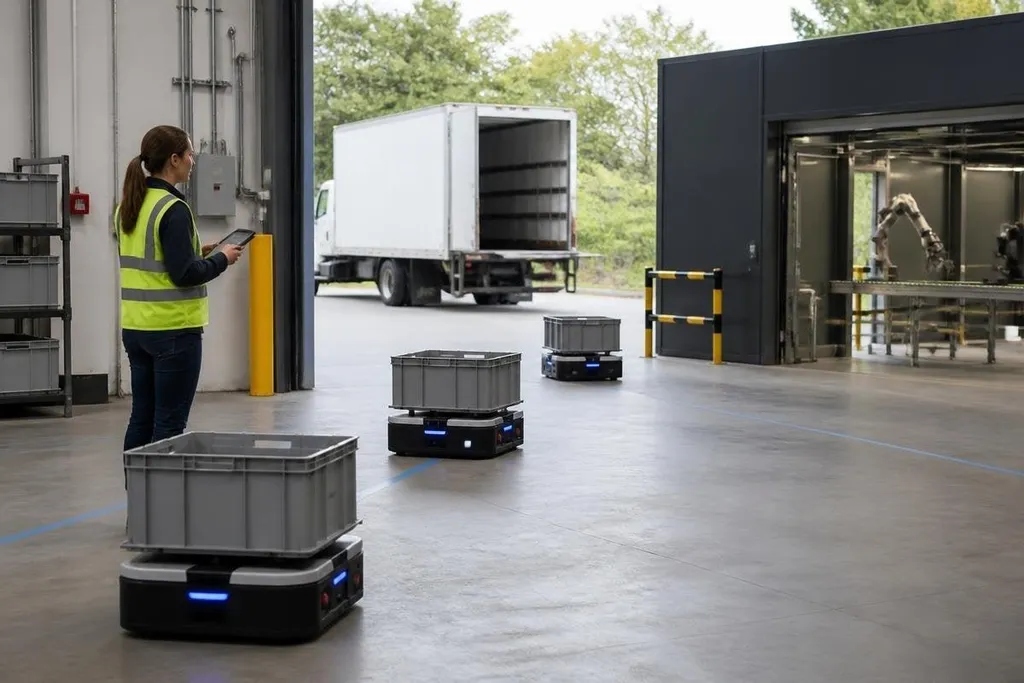
An autonomous logistics network links moving machines with warehouses, loading points, roads, lifts, software, and people. A mobile robot may move a tote across one site, but the order can still wait for a door, a truck, a picker, or a charging space.
That makes coordination more important than any single vehicle. Each part needs access to the information that affects its next move: where an item is, which route is open, when a dock is free, and whether a handoff has been completed.
The data does not need to look the same in every system. It does need clear meaning. “Ready for pickup” should describe the same state to a warehouse robot, a scheduling system, and a human worker checking a screen.
This is where many plans become harder than the first robot demonstration. A controlled test can give one machine a fixed task. A working network must deal with late orders, blocked aisles, missing items, damaged packages, and changes in demand.
Shared rules make autonomy useful
Autonomous machines need rules for priority, access, and recovery. A delivery carrying a time-sensitive order may move ahead of routine stock, but that decision should come from a stated policy rather than a hidden setting inside one vendor’s software.
The same applies to traffic. Robots need to reserve space, release it after a task, and report when a route becomes unsafe. If two systems make different assumptions about those steps, people may have to intervene at every boundary.
Common interfaces can reduce that work. They can let a warehouse management system send a task, receive a status, and pass an exception to a supervisor without knowing every detail of a robot’s internal control software.
A fleet can share task data and still need separate checks for each machine, site, and result. Robot24.com can help you compare those details with claims about autonomous logistics networks. The next question is where shared software stops and local safety control begins.
Still, shared rules do not remove the need for local control. A vehicle must stop for a person in its path even if the wider scheduling system has marked the route as open. Safety decisions belong close to the machine that can detect the hazard.
People remain part of the control loop
Autonomy works best when workers know what the system is doing and why it stopped. A supervisor should see the blocked task, the machine involved, the last successful step, and the action the system expects next.
That information changes training. Staff may spend less time driving equipment and more time checking exceptions, clearing faults, and managing unusual orders. The work still needs judgment, especially where an item is damaged or a customer instruction conflicts with a standard process.
A network also needs a clear handoff back to people. The system should pause safely, preserve the task state, and explain what it could not decide. A silent stop turns a small fault into a search problem.
What to measure before expansion
Robot count says little about the health of a logistics network. A better review follows the order through each handoff and records where time is lost.
Track completed orders per shift, including orders that needed human help. Record time spent waiting for doors, chargers, staff, or another machine, along with failed handoffs and the reason each one stopped. Recovery time after a blocked route, software fault, or missing item also shows where the network needs work.
Add changes in safety events, damaged goods, and manual work to that review. These measures connect automation to the work that the network must complete, and they show whether a new robot fixes a delay or moves that delay to another part of the site.
A practical decision guide
Before adding more autonomous equipment, check these points:
- Map every handoff from order release to final loading.
- Define the status names that each system must understand.
- Give people a visible method to pause, reroute, and resume work.
- Test blocked routes, missing goods, low battery, and lost connections.
- Record the cost of manual recovery, not only machine uptime.
I’d invest in shared control rules before buying more robots. A machine that waits for missing information is still an expensive waiting machine.
The open question is how many logistics companies will treat data ownership, safety decisions, and recovery plans as part of the robot purchase rather than as work for later.